55 Icebreaker Questions for Team Meetings (Tagged by Personality)
55 icebreaker questions for team meetings, grouped by purpose and tagged with the Big Five trait each one safely surfaces, plus the evidence for openers.
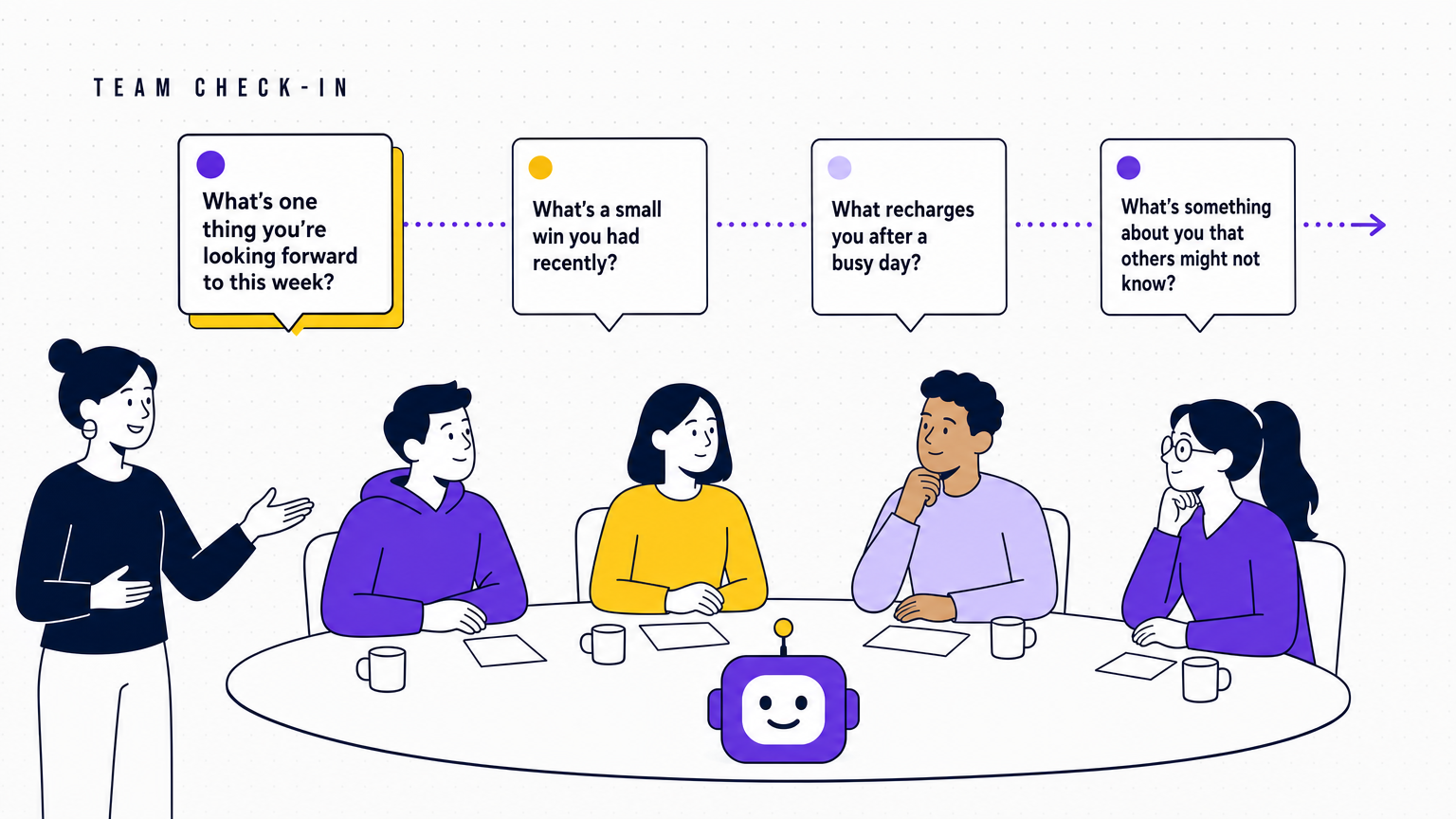
A good icebreaker question is not a warm-up act before the real meeting. It is the part of the meeting that decides whether the next hour is honest or guarded. The right opener gets a quiet engineer talking before the loudest person in the room has set the tone, and it does that in under five minutes.
This is a working list of 55 icebreaker questions for team meetings, grouped by the situation you are actually in: a brand-new team, a weekly standup, a hybrid call, a tense retrospective, a leadership offsite. What makes it different from every other list is the tag on each question. Every one is matched to the Big Five personality trait it most safely surfaces, so you can read the room and pick a question that fits the people in it rather than the one that sounded fun on a blog.
If you want the wider craft this sits inside, the meeting facilitation pillar guide covers the skills, patterns, and pitfalls in full. This post is the opener toolkit.
The short answer
Icebreaker questions for team meetings are short, low-stakes prompts that get every person speaking early, level out who contributes, and build the trust a group needs before it can do real work. The evidence for why they help is strong, and it has almost nothing to do with fun.
When teams open with a structured round rather than letting conversation start on its own, three things shift:
| What changes | Why it matters | The evidence |
|---|---|---|
| Everyone speaks early | A person who has spoken once in the first five minutes is far more likely to speak again | Pentland’s sociometric research on conversational engagement |
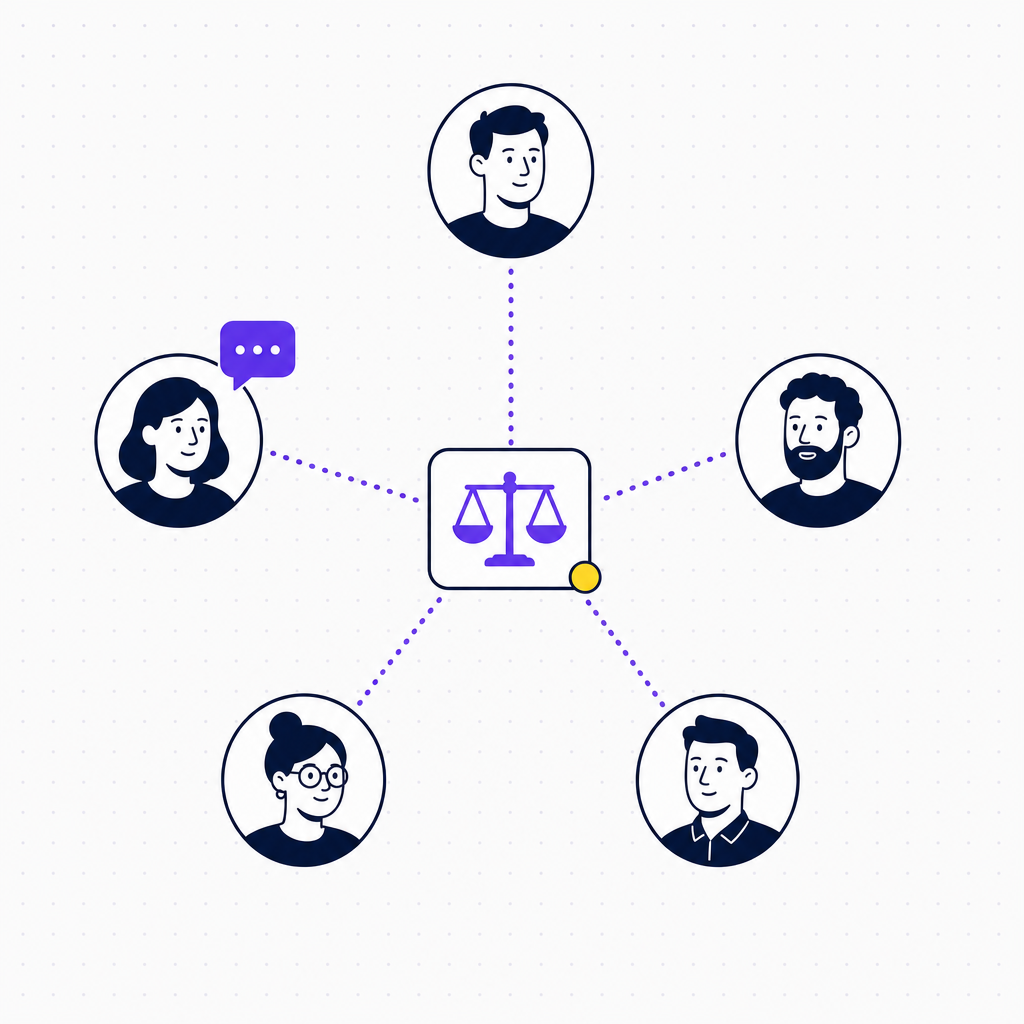
| Participation evens out | Group performance tracks equal turn-taking more than individual IQ | Woolley et al., Science, 2010 |
| Interpersonal risk drops | People share ideas only when they feel safe to look ignorant or wrong | Edmondson’s work on psychological safety |
The catch is that a badly chosen question does the reverse. It raises anxiety, exposes people who did not consent to be exposed, and teaches the room that this is not a safe place to speak. The tags and the safety rules below exist to keep you on the right side of that line.
Why structured openers actually work
The case for opening rounds rests on a few well-replicated findings, not on the idea that people like games.
The foundational one is psychological safety. Amy Edmondson, of Harvard Business School, defines it as a shared belief that the team is safe for interpersonal risk-taking. Her core observation is that no one wants to look ignorant, incompetent, intrusive, or negative, so people quietly manage those impressions by staying silent: they do not ask the question, admit the mistake, or float the half-formed idea. A meeting that opens by getting everyone to say something low-stakes chips away at that silence before the high-stakes part begins.
The second is about who talks. Anita Woolley and colleagues, writing in Science in 2010, found that a team’s collective intelligence was predicted less by the average or peak IQ of its members than by how evenly conversational turns were distributed. Teams where a few people dominated underperformed teams where airtime was shared. Alex Pentland’s group at the MIT Human Dynamics Laboratory reached a parallel conclusion using wearable sociometric badges across thousands of people, identifying energy and engagement, the equal distribution of those exchanges, as among the strongest predictors of team performance, rivalling individual skill and intelligence combined.
There is also direct evidence on opening rituals themselves. A meta-analysis by Klein and colleagues in Small Group Research (2009), covering 60 effect sizes, found that team-building interventions produced real gains in trust, coordination, and other outcomes, with goal setting and role clarification among the most effective ingredients. Later work by Hobson and colleagues in the Journal of Applied Psychology (2018) showed that performing group rituals increased the felt meaningfulness of work, which in turn reduced social loafing. A consistent opening round is one of the cheapest rituals a team has.
None of this requires the question to be clever. It requires it to be answered by everyone, briefly, near the start.
What makes a question safe rather than intrusive
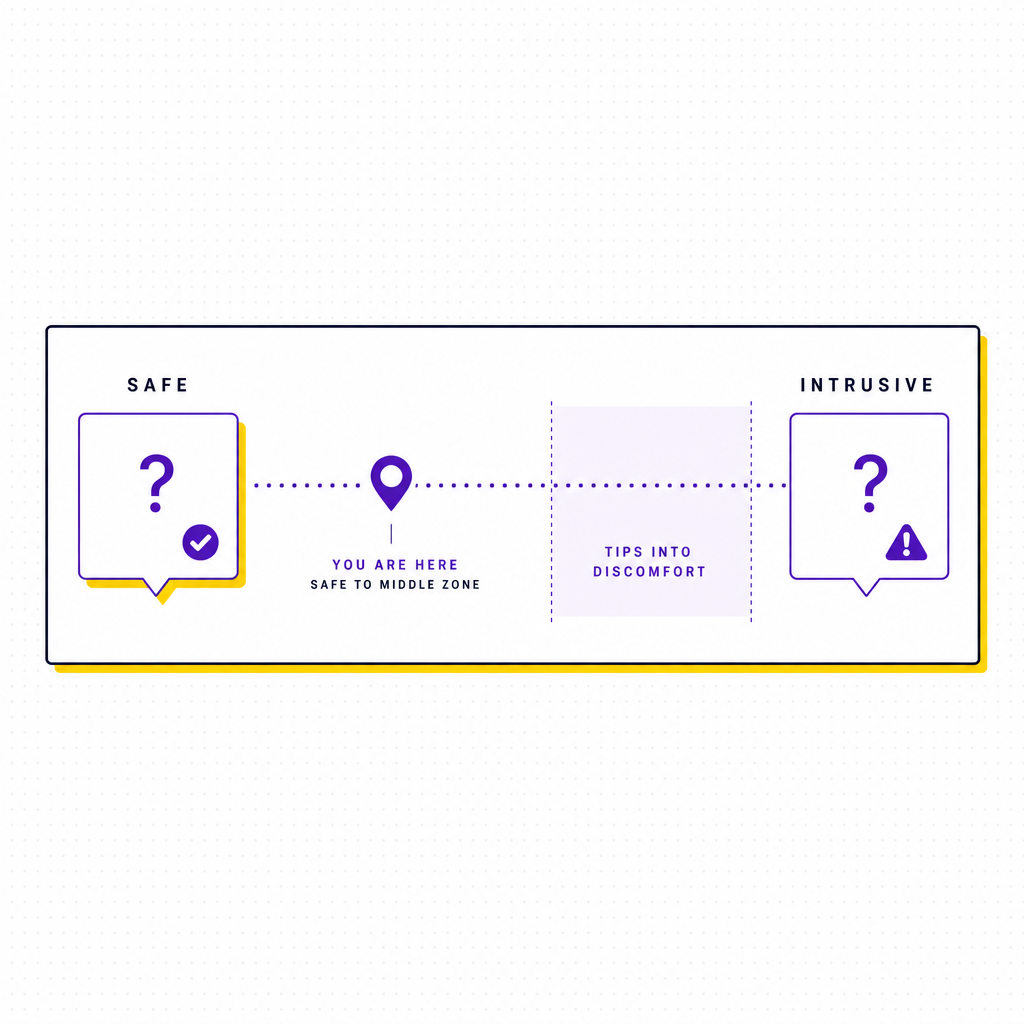
This is the part most lists skip, and it is the part that separates a facilitator from someone reading questions off a card. A poorly chosen icebreaker triggers the exact defensive behaviour you are trying to dissolve. Drawing on the clinical literature around self-disclosure, four criteria keep a prompt on the safe side.
The first is voluntary depth. A safe question lets the person decide how much to reveal. “What is the best advice you have ever been given?” can be answered with a throwaway tip or a deeply personal story, and the choice belongs to the speaker. A question that forces a single level of intimacy on everyone does not.
The second is relevance. The prompt should connect to the meeting’s purpose or the shared work, not serve the facilitator’s appetite for forced closeness. A round before a planning session lands better when it is loosely about work than when it demands a childhood memory.
The third is discomfort without comparison. A little stretch is good. A question that quietly ranks people is not. “Where did you go on holiday this summer?” sounds harmless and is one of the worst offenders, because it surfaces income differences and leaves the people who went nowhere with nothing safe to say.
The fourth is no forced intimacy. Corporate meetings are not therapy. Prompts that demand emotional unburdening, dig into trauma, or require vulnerability the group has not earned cross an ethical line and can do real harm. Save depth for teams that have built the trust to hold it, and even then, let people opt out.
One more rule sits above all four. You cannot declare a room safe. Walking in and announcing “this is a safe space” does not make it one. Safety is earned through many small moves, and the most reliable one is that the leader goes first, answering their own question with real but measured honesty before asking anyone else to.
How to use the personality tags
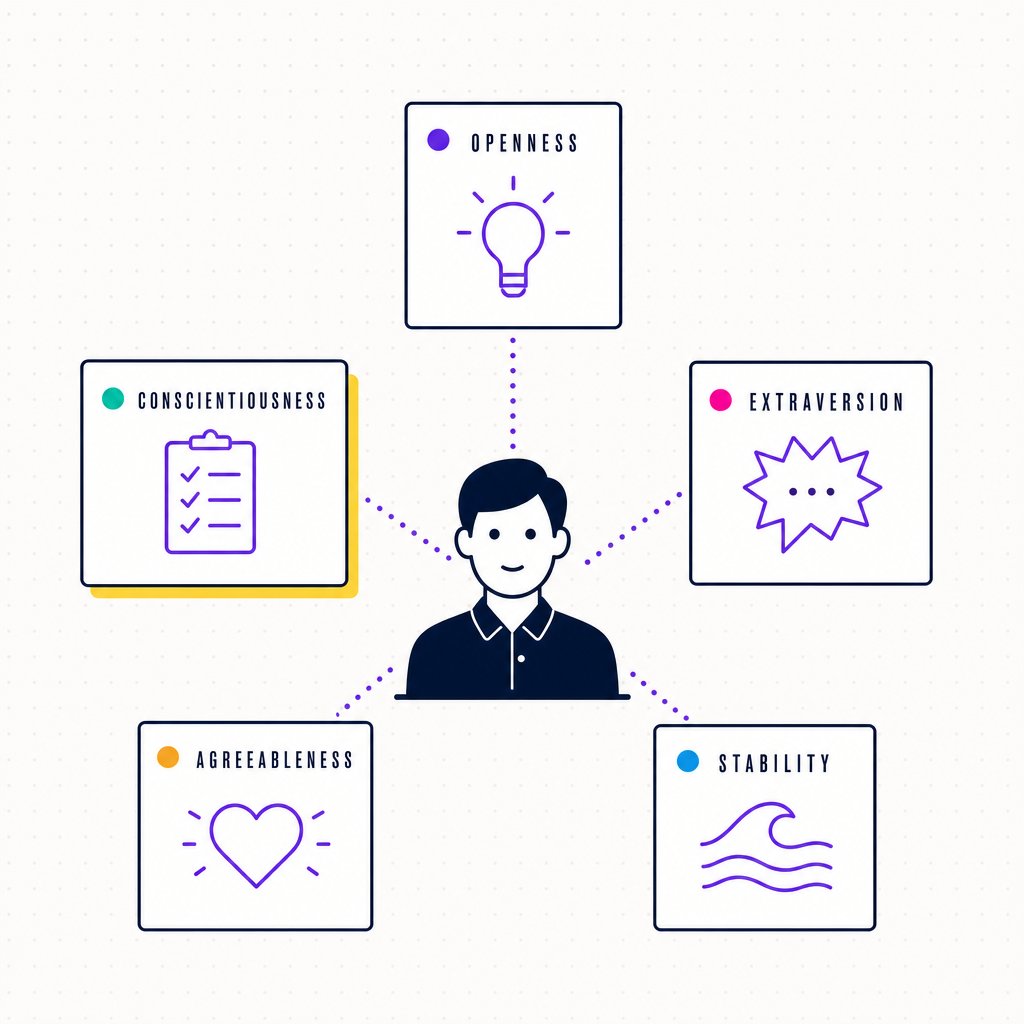
Each question below carries a tag for the Big Five trait it most naturally draws out. The Big Five, or Five-Factor Model, is the most validated map of personality in psychology, built from the work of Tupes and Christal in 1961 and expanded by Costa and McCrae. Its five dimensions, openness, conscientiousness, extraversion, agreeableness, and emotional stability, are stable over time, partly heritable, and show up across cultures. For the deeper background, our guide to the Big Five personality traits covers the model in full.
You do not need to test anyone. The point is the opposite. The tags help you vary your openers so that, over a few meetings, you give every kind of person an easy way in:
- Openness questions reward curiosity and imagination, and suit people who light up at abstract or novel prompts.
- Conscientiousness questions reward structure and progress, and respect people who find whimsical openers a waste of time.
- Extraversion questions are social and energising, and need a time limit so the room’s extraverts do not run away with them.
- Agreeableness questions invite gratitude and connection, and tend to warm the whole group.
- Emotional stability questions are deliberately low-stakes and predictable, the safest choice for a new or anxious group.
A simple habit: rotate the trait you lead with. If last week was a playful extraversion question, make this week a concrete conscientiousness one. Over a month, nobody is consistently left on the back foot.
Icebreaker questions for a brand-new team
Use these when people do not yet know each other. Keep depth low and let everyone answer in one or two sentences.
- What is one thing you are good at that has nothing to do with work? (Openness)
- What is the best piece of advice you have ever been given? (Openness)
- If you could instantly master any skill, what would it be? (Openness)
- What is a small ritual that helps you start the working day well? (Conscientiousness)
- What is one tool or habit you would not want to work without? (Conscientiousness)
- What is your favourite way to unwind after a long day? (Extraversion)
- Who is someone, not in this meeting, you are grateful to have learned from? (Agreeableness)
- What is the most interesting thing you have learned recently? (Emotional stability)
- What is one word you would use to describe how you like to work? (Emotional stability)
Quick check-in questions for recurring meetings and standups
These are pulse checks: fast, low-friction, often one word. Tools built for daily standups lean on this format because it surfaces state of mind and blockers without slowing the meeting down.
- In one word, how are you arriving at this meeting today? (Emotional stability)
- What is one small win from last week? (Conscientiousness)
- What is the one thing you most want to get done today? (Conscientiousness)
- On a scale of one to five, what is your energy level, and why? (Emotional stability)
- What is one thing currently blocking you that the team should know about? (Conscientiousness)
- What is something you are looking forward to this week, at work or outside it? (Extraversion)
- What is one decision you are hoping we close today? (Conscientiousness)
- If today had a weather forecast, what would it be? (Openness)
Fun icebreaker questions for work
When the team needs levity before heavy cognitive work, or you are warming up a large group, lighter prompts do the job. Keep a firm time limit so the energy does not become the meeting.
- What is the most-used emoji on your phone right now? (Extraversion)
- Would you rather always be ten minutes early or ten minutes late, forever? (Openness)
- What is a wildly unpopular food opinion you will defend? (Extraversion)
- If your job had a theme song, what would it be? (Openness)
- What is one workplace buzzword you would happily ban forever? (Extraversion)
- What is the strangest job you have ever had? (Openness)
- What small thing always makes your day a little better? (Agreeableness)
Ice breaker questions for virtual and hybrid meetings
Remote and hybrid calls need openers that work without a shared room, and that pull the on-screen voices in by name. Visual or one-word answers help, because they do not depend on reading body language.
- Show us one object within arm’s reach and tell us why it is there. (Openness)
- What is the view from where you are working today? (Emotional stability)
- Drop one emoji in the chat that sums up your week, then we will go round. (Emotional stability)
- What is one thing that makes remote work better for you, and one that makes it harder? (Conscientiousness)
- If we were all in the same room right now, where would you want it to be? (Openness)
- What is a small home-office upgrade that was worth it? (Conscientiousness)
- Who on this call have you not spoken to directly in a while? (Agreeableness)
For small groups, where there is room for everyone to give a fuller answer, you can let these run a sentence or two longer and follow up with a genuine question.
Reflective questions for retrospectives and post-incident reviews
After something has gone wrong, the opener sets whether the review is honest or defensive. The aim is to signal that learning, not blame, is the point. These suit teams that already have some trust.
- What is one thing that went better than you expected? (Agreeableness)
- What is something you would do differently if we ran this again? (Conscientiousness)
- Where did you feel most stretched during this? (Emotional stability)
- What is one assumption we made that turned out to be wrong? (Openness)
- What support did you need that you did not have? (Conscientiousness)
- What is one thing a teammate did that helped you this cycle? (Agreeableness)
Pair these with a structured debrief rather than letting the conversation wander. Our guide to running an after-action review walks through the full sequence.
Deeper questions for leadership offsites and established teams
Reserve these for groups with real psychological safety: an established team, a leadership retreat, a longer offsite. They build trust, but only when the room has earned the right to ask them, and only when people can pass.
- What motivates you to keep going on a genuinely hard day? (Emotional stability)
- What is a piece of feedback that changed how you work? (Conscientiousness)
- When do you feel most like yourself at work? (Openness)
- What is something this team does that you would fight to protect? (Agreeableness)
- What is a strength of yours that you feel the team underuses? (Conscientiousness)
- What do you need from the rest of us that you have not asked for? (Agreeableness)
- What is a belief about how we work that you have changed your mind on? (Openness)
- What would make the next year here genuinely worth it for you? (Emotional stability)
How to run any of these well
A list of questions is only half the tool. The delivery is the other half, and four habits carry most of the value.
Go round in a clear order so nobody has to fight for a gap, and so the quiet voices are guaranteed a turn. Answer first, as the leader or facilitator, with something real but appropriately light. Hold a firm time limit, because an opener that swallows ten minutes trains people to dread the next one. And always offer a pass, since a question that cannot be declined is no longer a question, it is a demand.
The deeper challenge is knowing whether your openers are actually working. Did participation even out, or did the same three people carry the room again? That is hard to judge while you are also running the meeting, which is the gap the closing section is about.
How we chose these questions
We started from the categories that facilitation platforms broadly agree on, check-ins, fun prompts, role-specific questions, and deeper reflective prompts, and from SessionLab’s framing that a strong opener needs relevance, a little spice, room for expression, and a sense of connection. We then filtered every candidate against the four safety criteria above and cut anything that forced comparison or intimacy. Finally, we tagged each surviving question with the Big Five trait it most naturally draws out, using the Five-Factor Model literature, so the list does double duty: a question to ask, and a reason it fits the person answering. No question on this list requires anyone to disclose more than they choose to.
Frequently asked questions
What are good icebreaker questions for team meetings? The best ones are short, answerable by everyone in a sentence, and matched to the situation. For a new team, low-stakes prompts like “What is the most interesting thing you have learned recently?” work well. For a weekly standup, a one-word check-in or “What is one small win from last week?” keeps it fast. The strongest openers connect loosely to the work and let people choose how much to share.
How long should an icebreaker take in a team meeting? For a regular meeting, two to five minutes total. A quick one-word round can take under two minutes even with eight people. The rule is that the opener should never feel like it is competing with the meeting; the moment it does, shorten it. Deeper questions at an offsite can run longer because building trust is the actual agenda.
Are icebreakers a waste of time? Done badly, yes. Done well, the evidence says no. The benefit comes from getting everyone to speak early and evening out who contributes, which research links to higher team performance and trust. The waste comes from forced, irrelevant, or intrusive prompts that raise anxiety instead of lowering it. A relevant question, answered briefly by everyone, is rarely wasted time.
What icebreaker questions should you avoid? Avoid anything that forces comparison or exposure: questions about holidays, salary, relationship status, or anything that assumes a level of privilege or personal detail people may not want to share. Avoid demands for deep vulnerability with a new or low-trust group. And avoid questions only the confident extraverts will enjoy, unless you add structure so everyone gets a turn.
How do you make icebreakers work in virtual meetings? Use prompts that do not depend on a shared room or on reading body language. One-word chat answers, “show us one object near you,” or a quick emoji round all work. Go round by name so remote participants are pulled in deliberately rather than waiting for a gap that never comes, and keep them short, since silence stretches longer on a call.
Stop guessing whether your openers are working
The hard part of facilitation is not the questions. It is seeing what actually happened in the room. Did the new starter speak more than once? Did the quiet half of the team get drawn in, or did the same voices fill the space again? Memory is a poor judge of this, and the person running the meeting is the worst-placed to also be observing it.
This is what Team Building Bot is built for. It joins your online meetings, listens for who spoke, who held back, and how evenly the conversation was shared, and turns that into a Team Dynamics Map you can act on. You can see what those reports look like on the reports overview. Instead of hoping your icebreakers landed, you get an evidence-based read on whether they did.
Sources
- Edmondson, A. C. Psychological safety and learning behavior in work teams, and subsequent work on interpersonal risk-taking. HBS publication (PDF) · what is psychological safety at work (CCL) · psychological safety and learning (PMC).
- Woolley, A. W., et al. (2010). Evidence for a collective intelligence factor in the performance of human groups. Science. paper (PDF) · Carnegie Mellon summary · Woolley on collective intelligence (interview).
- Pentland, A. (2012). The new science of building great teams. Harvard Business Review, and the MIT Human Dynamics Laboratory sociometric research. HBR product page · article (PDF, Source Consulting) · the new science of team building (PDF).
- Klein, C., et al. (2009). Does team building work? A meta-analysis of team-building interventions, Small Group Research. APA release (PDF) · team-building evidence summary (Science for Work).
- Hobson, N. M., et al. (2018). Group rituals and the meaning of work. Journal of Applied Psychology / Harvard Business School. work group rituals enhance meaning (HBS PDF) · effects of organizational rituals on engagement (ResearchGate).
- The Big Five / Five-Factor Model (Tupes & Christal 1961; Costa & McCrae): Big Five personality traits (Wikipedia) · Big Five overview (Simply Psychology) · five personality types based on the Big Five (Prepare-Enrich PDF) · Big Five and work behaviour (Florida Tech) · trait table (Temple PDF).
- Psychological safety versus psychosocial safety, and the limits of icebreakers: psychological safety vs psychosocial safety · psychosocial safety (Psych Safety) · the role of facilitation in psychological safety (Voltage Control).
- Safe versus intrusive self-disclosure (clinical literature): boundaries and self-disclosure (Leading Edge Seminars) · therapist self-disclosure · self-disclosure: a clinical guide (Blueprint) · authenticity vs autobiography (Vistas Wellness).
- Icebreaker categorisation and question banks (industry sources): the ultimate guide to great icebreaker questions (Facilitator School) · icebreaker questions (TeamBonding) · icebreaker questions to boost engagement (Applauz) · ice breaker questions for work (eLearning Industry) · icebreaker questions (Wellhub).
- Asynchronous check-ins, burstiness, and AI-assisted facilitation (2024–2026): raising the collective intelligence of teams (Sunsama) · tAIfa: LLM feedback on team interactions (arXiv) · speed of engagement (High Performance Routines PDF).
- ROI of cohesion and psychological safety (secondary sources, see uncertainty note in PR): team enablement as strategy (JVR Africa Group) · coworking design increased new leadership by 84% (The Decision Lab).
More on Meeting Facilitation
- arrow_forward The Facilitator Skills Map: Good vs Great in 6 Dimensions
- arrow_forward 7 Sprint Retrospective Ideas for Non-Engineering Teams (2026)
- arrow_forward Social Facilitation at Work: When an Audience Helps or Hurts
- arrow_forward 8 Group Facilitation Skills Every Trainer Needs in 2026
- arrow_forward 10 Team Meeting Agenda Templates That Drive Decisions (2026)
- menu_book Meeting Facilitation: Skills, Patterns, and Pitfalls Pillar
See who your icebreakers are actually reaching
Team Building Bot joins your online meetings, listens for who spoke, who held back, and how evenly the conversation was shared, and turns it into a Team Dynamics Map. Free during beta.
No spam, no credit card. Unsubscribe any time.