10 Team Meeting Agenda Templates That Drive Decisions (2026)
Ten copy-paste team meeting agenda templates for standups, all-hands, retros, 1:1s and more. 72% of meetings are ineffective; a structured agenda is the fix.
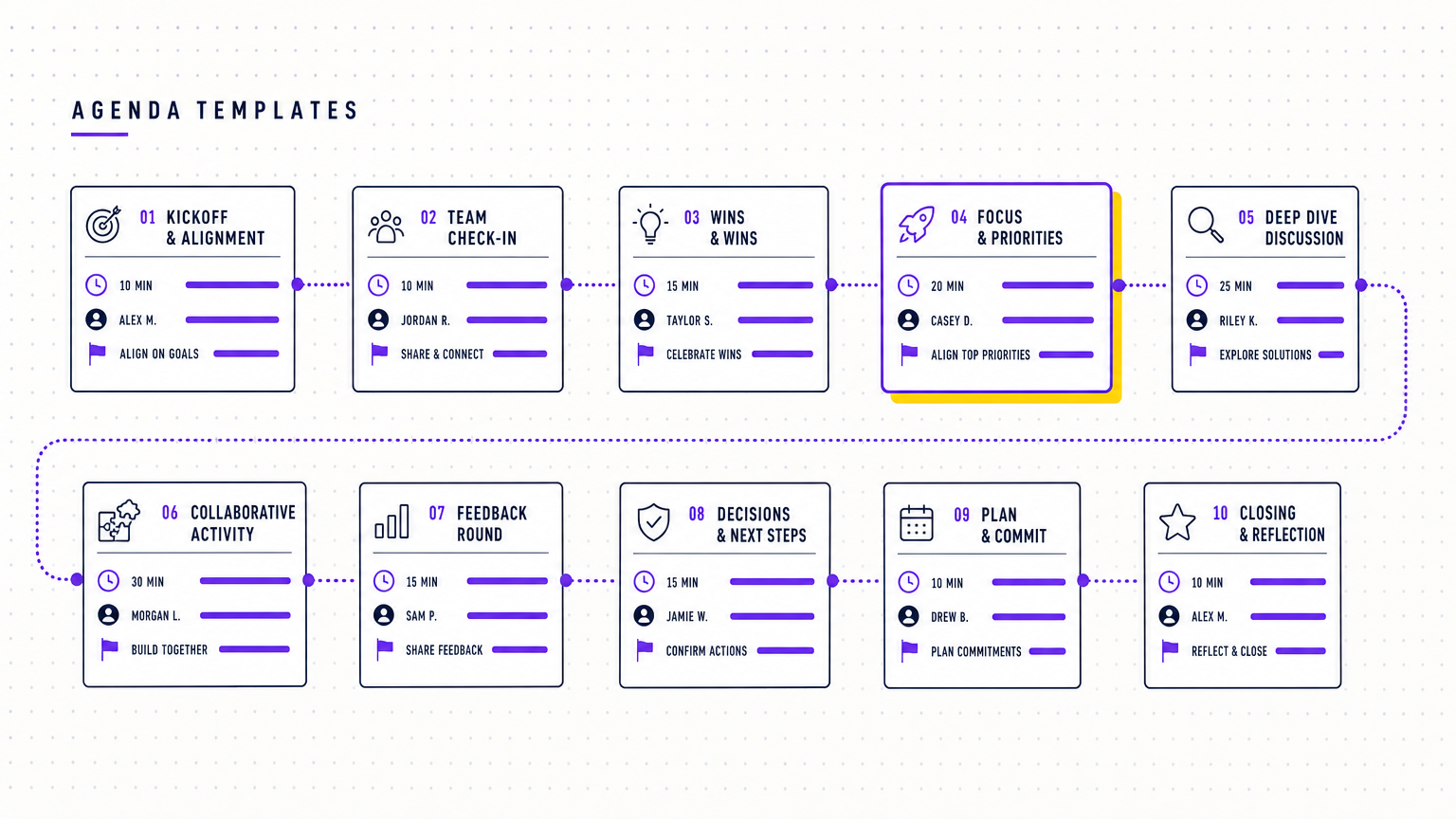
Most meeting agendas are a list of topics with no timing, no owner, and no statement of what the meeting is supposed to produce. That kind of agenda tells people what you’ll talk about. It does nothing to make the hour end in a decision.
This is a set of ten team meeting agenda templates you can copy straight into a calendar invite or a doc. Each one is built for a specific job: a weekly sync, a monthly all-hands, a quarterly planning session, a retro, a brainstorm, a decision meeting, a project kickoff, a one-on-one, a post-mortem, and a conflict-resolution conversation. Every template has timeboxes, named owners, and one line that most agendas leave out: the outcome the meeting has to reach before people leave.
If you want the wider craft these sit inside, the meeting facilitation pillar guide covers the skills, patterns, and pitfalls in full. This post is the template kit.
The short answer
A team meeting agenda is a structured plan that says, for each item, how long it gets, who runs it, and what it needs to produce. A good agenda is built backwards from the decision the meeting exists to make. A weak one is a topic list.
The difference is not cosmetic. It changes whether the meeting ends with owners and next steps or with “let’s pick this up next week”.
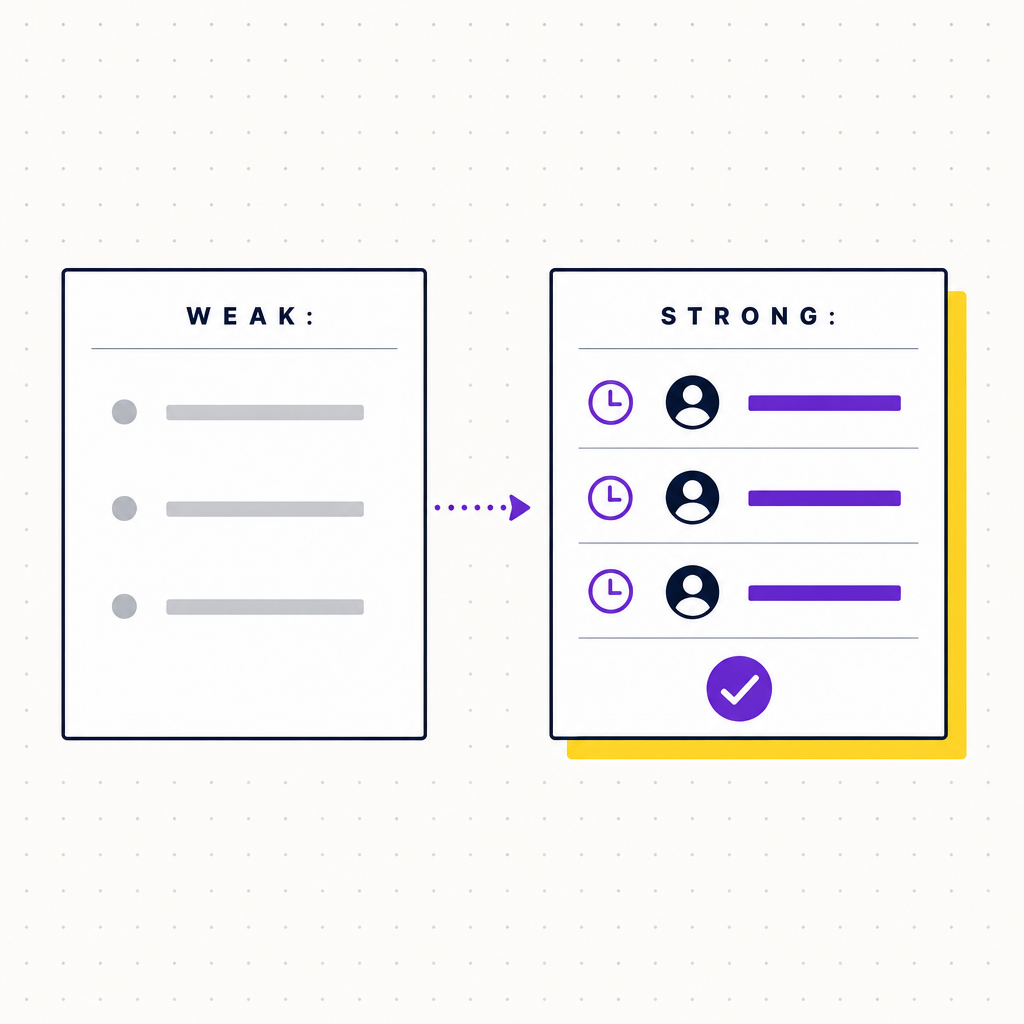
| A weak agenda | A decision-driving agenda |
|---|---|
| Lists topics | States the outcome each topic must reach |
| No timing | Timeboxes every item |
| No owner per item | Names who runs each item |
| Discussion is open-ended | Discussion is built backwards from a decision |
| Notes, if any, are a transcript | Captures decisions, owners, and due dates |
Use the templates below as starting points, not scripts. Cut what your team doesn’t need, and protect the timeboxes even when a good tangent shows up.
What the evidence says about agendas
In 2026, roughly 72% of meetings are rated ineffective, and ineffective meetings cost US organisations an estimated $37 billion a year (Atlassian; Lucid, via My Hours, Meeting Statistics, 2025). The same survey found that 79% of workers say a clear agenda is what makes a meeting productive, the single most-cited factor.
There’s a catch the headline number hides. An agenda is not a magic object. Steven Rogelberg, the organisational psychologist behind The Surprising Science of Meetings (2019), is blunt that having an agenda is far less important than how the time inside it is run. A meeting agenda only helps when someone actually facilitates against it: holds the timeboxes, closes each item with a decision, and stops the loudest person setting the agenda in the room.
Two more findings worth building into your defaults. Stand-up meetings run about a third shorter than seated ones with no measurable drop in decision quality, a result first documented by Allen Bluedorn and colleagues (Journal of Applied Psychology, 1998). And smaller meetings tend to be more effective: as group size climbs, effectiveness and individual task performance fall (Meeting effectiveness and task performance: meeting size matters, 2020). When you write an agenda, the invite list is part of it.
How to use these templates
Every template below follows the same four rules. They’re the part that does the work, so apply them even to the meetings you don’t have a template for.
- Lead with the outcome. Write one sentence at the top: “By the end, we will have decided X” or “produced Y”. If you can’t write it, the meeting may not need to exist.
- Timebox every item. A number next to each line forces a real conversation about what fits. Run it standing or walking when the meeting is short.
- Name an owner per item, not just for the meeting. The owner runs that item and is responsible for closing it.
- Capture decisions, not transcripts. At minimum, record the decision, the owner, and the due date for each item. A wall of notes nobody re-reads is wasted effort.
A practical move for synchronous time: send any status or context as a pre-read and protect the live hour for the parts that genuinely need everyone in the room. The agendas below assume you’ll do that.
1. Weekly team meeting agenda (the sync)
Best for a recurring 30-minute team sync that keeps a group aligned without eating the week. This is the workhorse weekly team meeting agenda, and the most common place a topic list quietly replaces a real plan.
Outcome: every blocker has an owner and the team agrees on the top priority for the week.
| Time | Item | Owner | Output |
|---|---|---|---|
| 3 min | Quick check-in round, one word each | Facilitator | Everyone has spoken once |
| 5 min | Wins and metrics since last week | Lead | Shared picture of where things stand |
| 12 min | Blockers and decisions needed | Item owners | Each blocker gets an owner or a decision |
| 7 min | Priorities for the coming week | Team | One agreed top priority per person |
| 3 min | Action review and close | Facilitator | Captured actions with due dates |
Keep status updates in writing beforehand. The live time is for blockers and decisions, not a round-robin of “what I did”. If you open with a quick round, the right opener matters; see the icebreaker questions for team meetings for prompts that get a quiet team talking fast.
2. Monthly all-hands meeting agenda
Best for a company or department gathering that builds context and trust at scale. A good all hands meeting agenda balances information with genuine two-way exchange, which is the part most companies skip.
Outcome: the team understands the priorities, the numbers, and has had real questions answered.
- Welcome and the one thing that matters this month (5 min, leader)
- Business update: progress against goals, key metrics, what changed (15 min, leader)
- Spotlight: a team or project shown in their own words (10 min, that team)
- Live Q&A from questions submitted in advance (15 min, leadership)
- Recognition and what’s next (5 min, leader)
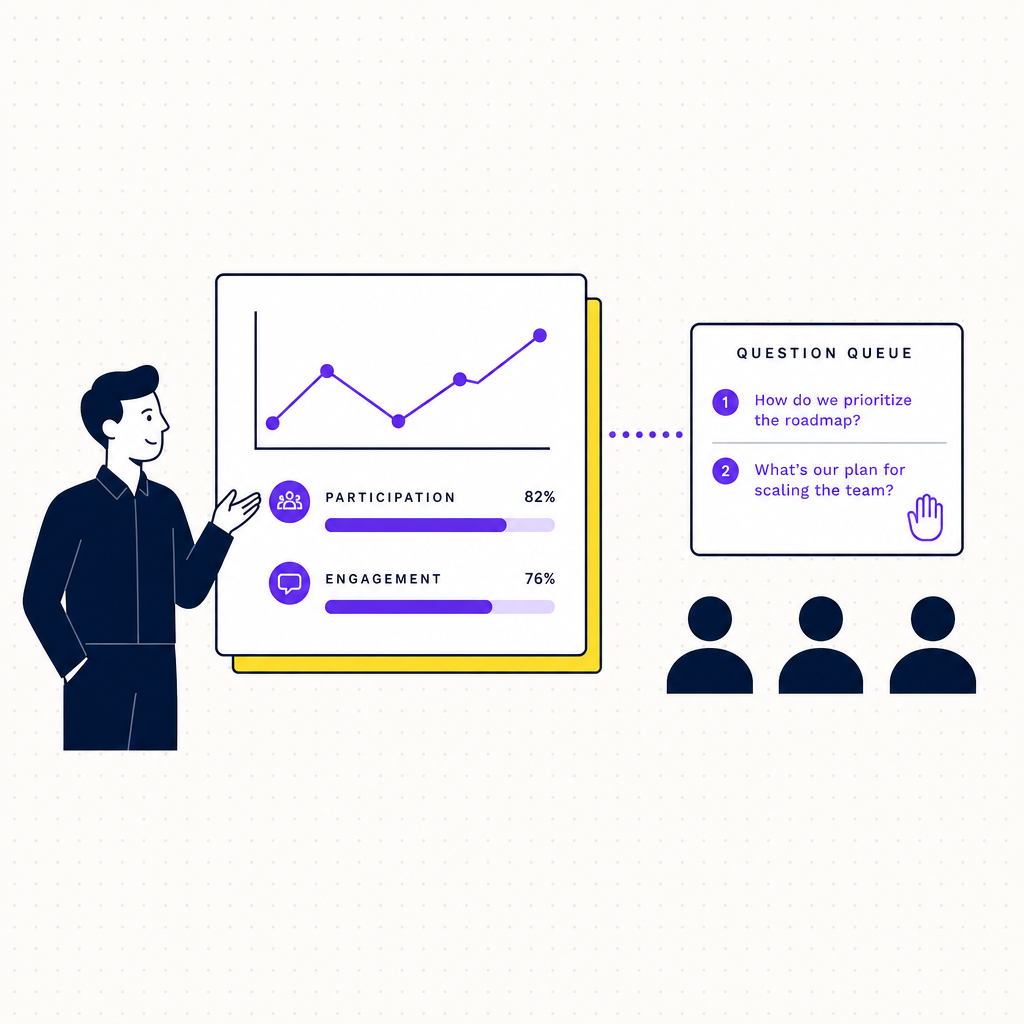
Collect questions ahead of time so the Q&A isn’t dominated by whoever’s quickest to unmute. For a hybrid all-hands, give remote attendees a dedicated channel and read their questions aloud, or they’ll go unheard.
3. Quarterly planning meeting agenda
Best for setting and committing to priorities for the next 90 days. This one needs more time, usually a half or full day, and the most pre-work of any template here.
Outcome: a short, ranked list of quarterly priorities with owners, and a clear view of what you’re not doing.
- Review last quarter: what we committed to, what we hit, what we missed (30 min)
- Context: market, customers, and the numbers that frame the quarter (20 min)
- Generate candidate priorities, individually first, then shared (30 min)
- Debate and rank: timeboxed, forced to a shortlist (45 min)
- Commit: assign owners and define what “done” looks like for each (30 min)
- Risks: name what could derail the plan and who watches each risk (15 min)
Send a written pre-read with last quarter’s results 48 hours ahead, so the room starts from a shared picture rather than spending the first hour catching up. The risk segment works far better as a pre-mortem: assume the quarter failed, then work backwards to why.
4. Retrospective meeting agenda
Best for a team reflecting on a sprint, project, or time period to improve how they work. A retrospective meeting agenda is structured around honesty, so the format exists to make it safe to be honest.
Outcome: two or three specific process changes the team commits to trying next.
| Time | Item | Purpose |
|---|---|---|
| 5 min | Set the stage and restate the prime directive | Frame this as learning, not blame |
| 10 min | Gather data: what happened, good and bad | Get specifics on the table |
| 15 min | Generate insight: why did it happen | Find root causes, not symptoms |
| 10 min | Decide what to do: pick a few changes | Commit to concrete actions |
| 5 min | Close the retro | Confirm owners and check the mood |
The single rule that makes retros work is psychological safety. State up front that the goal is the process, not the people. For the question set that surfaces the useful material, see the best debrief questions and templates.
5. Brainstorming meeting agenda
Best for generating a wide set of ideas before narrowing to a few. Most brainstorms fail because they converge too early, so the agenda deliberately separates generating from judging.
Outcome: a shortlist of two or three ideas worth taking forward, chosen from a wide field.
- Frame the problem as a clear, specific question (5 min, facilitator)
- Silent individual idea generation, written down, no talking (10 min, everyone)
- Round-robin share, one idea at a time, no critique yet (15 min, facilitator)
- Cluster and discuss the themes that emerge (10 min, group)
- Dot-vote to a shortlist and name next steps (10 min, group)
Silent generation first is the single best change you can make. It stops the first or loudest idea anchoring the room and gives quieter people equal airtime. Hold all judgement until the share is done.
6. Decision-making meeting agenda
Best when a real choice has to be made and you need it to stick. The failure mode here is a meeting that discusses a decision thoroughly and then makes no decision at all.
Outcome: a documented decision, the owner, and the date it takes effect.
- State the decision to be made and the deadline, in one sentence (3 min)
- Lay out the options and the criteria for choosing (10 min)
- Surface objections and risks, deliberately invite dissent (15 min)
- Name the decision method up front: who decides, and how (2 min)
- Decide, and record it (5 min)
- Confirm owner, communication plan, and review date (5 min)
Decide before the meeting how the decision gets made: consensus, a vote, or one named decider after hearing input. Ambiguity about who decides is the most common reason these meetings stall. Write the decision down in the room, while everyone can still object.
7. Project kickoff meeting agenda
Best for aligning a team at the start of a project so it doesn’t drift later. A kickoff is where you set scope, roles, and risks while changing them is still cheap.
Outcome: shared understanding of goal, scope, roles, and the first milestones, with risks named.
| Time | Item | Output |
|---|---|---|
| 10 min | Project goal and success criteria | Everyone can state the goal in one line |
| 10 min | Scope: what’s in and explicitly out | An agreed boundary |
| 15 min | Roles, responsibilities, and decision rights | Each person knows their lane |
| 10 min | Timeline and first milestones | A dated plan to the first checkpoint |
| 10 min | Risks and a pre-mortem | A named owner for each top risk |
| 5 min | Communication: cadence and tools | How the team will stay in sync |
The explicit “out of scope” line saves more projects than any other item. Spend real time on it. A short pre-mortem here, imagining the project has failed and asking why, surfaces risks a forward-looking plan misses.
8. One-on-one meeting agenda
Best for a recurring manager and report conversation focused on the person, not just status. A one on one meeting agenda should be owned mostly by the report, with the manager listening more than talking.
Outcome: the report feels heard, blockers are cleared, and growth gets airtime.
- Personal check-in: how are you, genuinely (5 min)
- The report’s topics, set the agenda from their list first (10 min)
- Blockers and support: what’s in the way, what do you need (5 min)
- Feedback, both directions (5 min)
- Growth and development, not every week but regularly (5 min)
- Action items and follow-ups from last time (5 min)
Let the report drive. A shared running doc where they add topics through the week makes the 1:1 about what matters to them, not a status report the manager could have read. Protect this meeting; cancelling it repeatedly sends a louder message than anything you’d say in it.
9. Post-mortem meeting agenda
Best for reviewing an incident or failure to learn from it without assigning blame. A post-mortem, or after-action review, turns a bad event into something the team is better for.
Outcome: a clear timeline, the root causes, and specific changes that make a repeat less likely.
- Restate the blameless ground rules (3 min, facilitator)
- Build the factual timeline of what happened (15 min, team)
- Analyse root causes, ask why repeatedly, go past the first answer (20 min, team)
- Identify what went well and should be kept (5 min, team)
- Agree corrective actions with owners and dates (10 min, team)
- Decide how the lessons get shared beyond this room (5 min, facilitator)
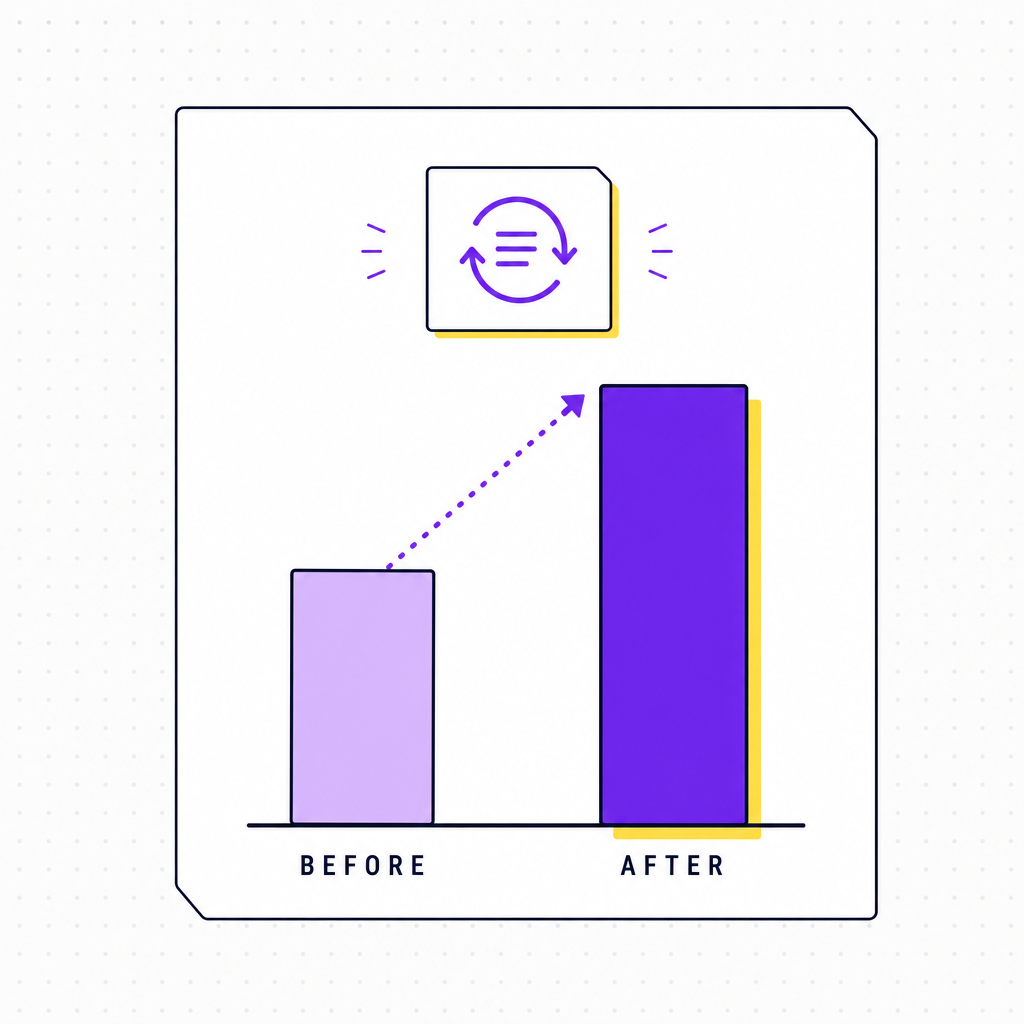
Keep it blameless and keep it specific. The evidence is striking: in a meta-analysis of 46 studies, structured debriefs improved team performance by around 20 to 25% on average, a large effect of roughly d = 0.67 (Tannenbaum and Cerasoli, Human Factors, 2013). The catch is that the effect only appears when the debrief is genuinely structured: focused on specific events, developmental in intent rather than punitive, and drawing on more than one person’s account.
10. Conflict-resolution meeting agenda
Best for working through a dispute between people or teams before it hardens. This is the hardest meeting to run, and the one most likely to be avoided until it’s worse.
Outcome: both sides feel heard, the real issue is named, and there’s an agreed way forward.
- Set ground rules: one person speaks at a time, focus on the issue not the person (5 min, neutral facilitator)
- Each side states their perspective uninterrupted (10 min, each party)
- Reflect back what was heard, check for understanding (10 min, facilitator)
- Identify the shared interest underneath the positions (10 min, all)
- Agree concrete next steps and how you’ll check in (10 min, all)
Use a neutral facilitator who isn’t a party to the conflict. The structure of equal, uninterrupted airtime followed by reflecting back what each side said does most of the work; it forces people to feel heard before anyone tries to solve the problem.
What separates the teams that get value from these
The template is the easy part. The hard part is the discipline around it: protecting the timeboxes, closing every item with a decision, capturing the owner and the date, and keeping the invite list small. A staff meeting agenda that’s followed loosely will still drift.
This is also where most managers are flying blind. You can feel that a meeting went badly, but you rarely have a clear read on who actually contributed, who went quiet, or where the discussion turned into a real decision. That pattern, repeated weekly, is what shapes whether a team trusts each other enough to do hard things together.
Frequently asked questions
What should a team meeting agenda include?
At minimum, a team meeting agenda needs a stated outcome, a timeboxed list of items, an owner for each item, and a place to capture decisions and action items. In 2026, 79% of workers say a clear agenda is the top driver of a productive meeting (Atlassian, via My Hours, 2025), but the agenda only works if someone facilitates against it.
How long should a team meeting be?
Shorter than you think. Stand-up meetings run roughly a third shorter than seated ones with no drop in decision quality (Bluedorn et al., Journal of Applied Psychology, 1998). A weekly sync can usually be done in 30 minutes if status moves to a written pre-read and the live time is spent on blockers and decisions.
Do agendas actually make meetings better?
Only when they’re used well. Having an agenda is associated with meetings people rate as productive, but Steven Rogelberg’s research shows the agenda matters far less than the facilitation: holding the timeboxes, closing each item with a decision, and balancing who speaks. A perfect agenda run badly still produces a bad meeting.
What’s the difference between a retrospective and a post-mortem?
A retrospective is a recurring look at how a team is working, run on a cadence like every sprint. A post-mortem, or after-action review, is triggered by a specific event, usually an incident or failure. Both rely on the same condition to work: psychological safety and a blameless focus on the process rather than the people.
How do I keep agendas from being ignored?
Make the agenda do real work: lead with the outcome, timebox every item, and assign an owner per item rather than only for the meeting. Capture decisions and due dates in the room. An agenda that’s just a topic list invites the drift it’s meant to prevent.
Sources
The research behind this post:
- My Hours, Meeting Statistics 2025, retrieved 2026-06-08, https://myhours.com/articles/meeting-statistics-2025
- Atlassian, State of Teams / meeting effectiveness data (reported via My Hours, 2025), retrieved 2026-06-08, https://myhours.com/articles/meeting-statistics-2025
- Rogelberg, S., The Surprising Science of Meetings (2019), summary retrieved 2026-06-08, https://cdn.bookey.app/files/pdf/book/en/the-surprising-science-of-meetings.pdf
- APA Monitor, The science of great meetings, retrieved 2026-06-08, https://www.apa.org/monitor/2016/12/great-meetings
- Meeting effectiveness and task performance: meeting size matters (2020), retrieved 2026-06-08, https://www.researchgate.net/publication/339724001_Meeting_effectiveness_and_task_performance_meeting_size_matters
- Bluedorn, A. et al., The effects of stand-up and sit-down meeting formats on meeting outcomes (Journal of Applied Psychology, 1998), retrieved 2026-06-08, https://www.researchgate.net/publication/232529574_The_effects_of_stand-up_and_sit-down_meeting_formats_on_meeting_outcomes
- CIPD, Productive meetings: a scientific summary (2023), retrieved 2026-06-08, https://www.cipd.org/globalassets/media/knowledge/knowledge-hub/evidence-reviews/2023-pdfs/8385-productive-meetings-scientific-summary-may23.pdf
- Tannenbaum, S. and Cerasoli, C., Do team and individual debriefs enhance performance? A meta-analysis (Human Factors, 2013), retrieved 2026-06-08, https://pubmed.ncbi.nlm.nih.gov/23516804/
- Tannenbaum and Cerasoli meta-analysis (ResearchGate copy), retrieved 2026-06-08, https://www.researchgate.net/publication/236068923_Do_Team_and_Individual_Debriefs_Enhance_Performance_A_Meta-Analysis
- Hirsch, W., How to use team debriefs to improve performance, retrieved 2026-06-08, https://wendyhirsch.com/blog/how-to-use-team-debriefs-to-improve-performance
- APA, Team development: debriefs (AMP), retrieved 2026-06-08, https://www.apa.org/pubs/journals/releases/amp-amp0000246.pdf
- Resolution, Team meeting agenda examples, retrieved 2026-06-08, https://www.resolution.de/post/team-meeting-agenda-examples/
- Mentimeter, Meeting agenda examples, retrieved 2026-06-08, https://www.mentimeter.com/blog/meetings/meeting-agenda-examples
- ClickUp, All-hands meeting guide, retrieved 2026-06-08, https://clickup.com/blog/all-hands-meeting/
- BlueDot, Effective all-hands meeting template, retrieved 2026-06-08, https://www.bluedothq.com/blog/effective-all-hands-meeting-template-all-in-one-guide
- Rhythm Systems, Quarterly planning meetings, retrieved 2026-06-08, https://www.rhythmsystems.com/blog/quarterly-planning-meetings
- Fellow, 11 meeting templates for every stage of a project, retrieved 2026-06-08, https://medium.com/fellowai/11-meeting-templates-for-every-stage-of-a-project-f28151eee1a5
- People Managing People, One-on-one meeting template, retrieved 2026-06-08, https://peoplemanagingpeople.com/performance-management/one-on-one-meeting-template/
- Lucid Meetings, Pre-conflict interview guide, retrieved 2026-06-08, https://www.lucidmeetings.com/sites/default/files/guidebooks/pre-conflict-interview-lucid-guide.pdf
- PositivePsychology, Conflict resolution in the workplace, retrieved 2026-06-08, https://positivepsychology.com/conflict-resolution-in-the-workplace/
- SessionLab, State of Facilitation 2026 / the facilitation impact gap, retrieved 2026-06-08, https://www.edufellowship.com/blog/facilitation-impact-gap/
- Entrepreneur, Shopify’s meeting cost calculator, retrieved 2026-06-08, https://www.entrepreneur.com/business-news/shopifys-cost-calculator-exposes-price-of-pointless/455726
- PsyPost, Zoom fatigue is largely gone in the post-pandemic workplace, retrieved 2026-06-08, https://www.psypost.org/new-study-suggests-zoom-fatigue-is-largely-gone-in-the-post-pandemic-workplace/
More on Meeting Facilitation
- arrow_forward The Facilitator Skills Map: Good vs Great in 6 Dimensions
- arrow_forward 7 Sprint Retrospective Ideas for Non-Engineering Teams (2026)
- arrow_forward Social Facilitation at Work: When an Audience Helps or Hurts
- arrow_forward 8 Group Facilitation Skills Every Trainer Needs in 2026
- arrow_forward 55 Icebreaker Questions for Team Meetings (Tagged by Personality)
- menu_book Meeting Facilitation: Skills, Patterns, and Pitfalls Pillar
See which agenda items your team actually engages with
Team Building Bot joins your online meetings, listens for who spoke, who held back, and where the discussion turned into a decision, and turns it into a Team Dynamics Map. Free during beta.
No spam, no credit card. Unsubscribe any time.